

What do the best pavement companies include in their proposal templates?
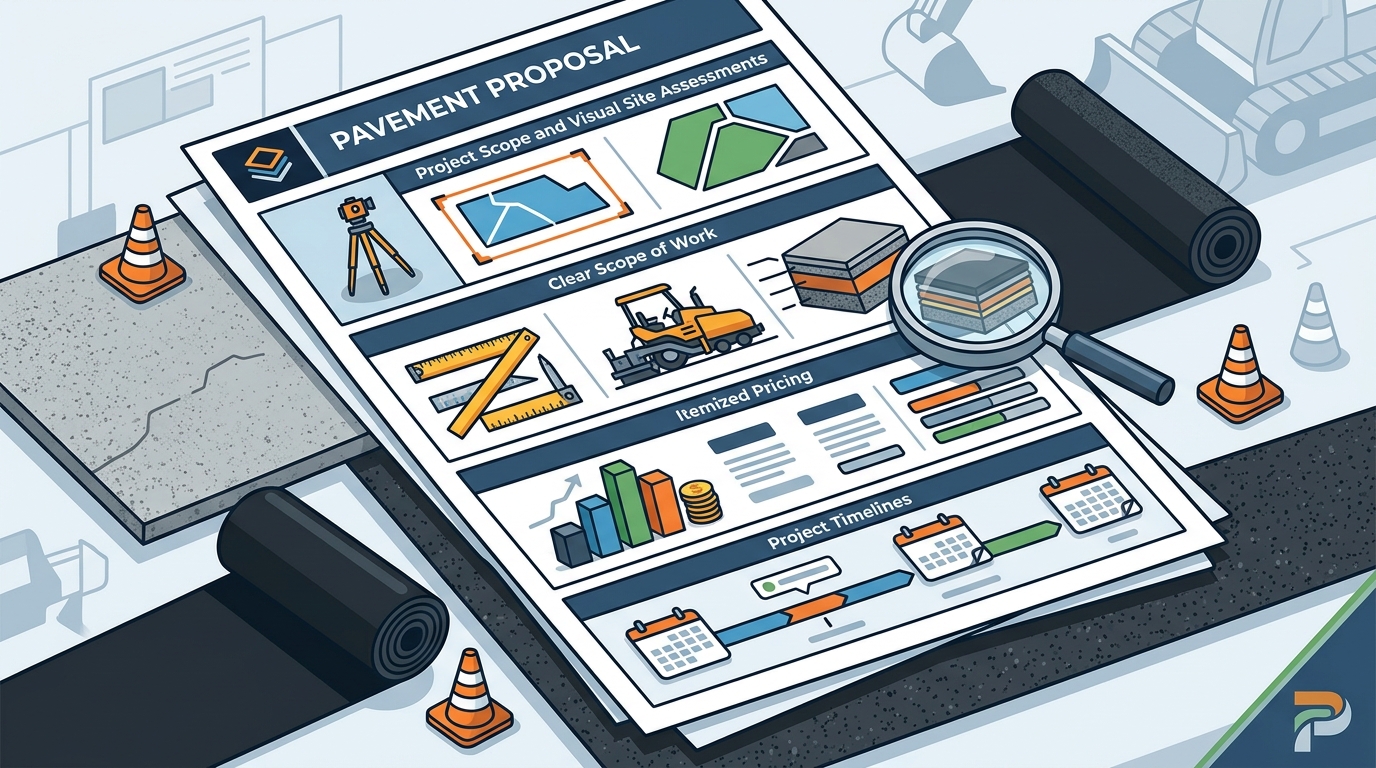
The best pavement companies include a clear scope of work, itemized pricing, project timelines, and visual site assessments in their proposal templates. These elements reduce client confusion and accelerate decision-making. PavementLayers supports this process by enabling teams to create, organize, and send customized proposals with images that win better work faster.
The Core Components of High-Performing Templates
A pavement proposal is a formal document that outlines the specific services, materials, and costs required to complete a paving or concrete project. The most effective templates begin with a precise scope of work. This section defines exactly what will be done, including square footage, material types, and preparation steps. Vague descriptions lead to change orders and disputes. Clear definitions build trust before the contract is signed.
Top firms also include a company overview and contact information. This establishes credibility and provides a direct line for questions. The template should reflect the brand identity of the firm. Consistency in formatting and tone signals professionalism. Clients are more likely to choose a provider who presents a polished and organized document.
Visual Evidence and Site Assessment
Visual documentation is a critical differentiator in modern pavement proposals. A site assessment is a detailed record of the current condition of the pavement, including cracks, potholes, and drainage issues. Including annotated images helps clients understand the necessity of the proposed work. It transforms abstract numbers into tangible problems that need solving.
PavementLayers integrates with WheelitOff, an iPad measuring and marking app, to upload images with measurements and repairs marked. This feature allows teams to show clients exactly where work will occur. It reduces the need for on-site meetings to explain scope. Visual clarity accelerates the approval process and minimizes post-sale surprises.
Itemized Pricing and Cost Transparency
Itemized pricing is a breakdown of costs by specific line items, such as materials, labor, equipment, and disposal. This level of detail allows clients to compare bids accurately. It also helps internal teams track profitability. Hidden fees or lump-sum pricing often erode trust. Transparent pricing demonstrates confidence in the estimate.
The best templates separate fixed costs from variable costs. This distinction helps clients understand what is guaranteed and what might fluctuate. It also simplifies the negotiation process. When clients see a clear structure, they are more likely to approve the proposal quickly. PavementLayers enables users to create proposals quickly, ensuring that pricing is accurate and up to date.
Timeline and Logistics Clarity
A project timeline is a schedule that outlines the start date, key milestones, and expected completion date. Clear timelines help clients plan around construction disruptions. They also help crews manage their workload. Ambiguity in scheduling is a common source of client frustration. Specific dates and phases set clear expectations.
Key Takeaways
- A pavement proposal is a formal document that outlines services, materials, and costs for a project.
- Visual site assessments with annotated images significantly improve client understanding and approval rates.
- Itemized pricing builds trust by providing transparency into materials, labor, and equipment costs.
- Clear project timelines and logistics details reduce client anxiety and operational friction.
- Using software like PavementLayers allows teams to create customized, image-rich proposals in minutes.
- Consistent branding and professional formatting signal credibility and attention to detail.
Frequently Asked Questions
What is the most important element of a pavement proposal?
The scope of work is the most important element. It defines exactly what will be done and prevents misunderstandings about the project boundaries.
How long should a pavement proposal take to create?
With the right software, a proposal should take less than five minutes to create. This speed allows teams to respond quickly to leads and stay competitive.
Do I need to include images in my proposal?
Yes, images are highly recommended. They provide visual evidence of the current site condition and help clients visualize the final result.
What is the difference between a quote and a proposal?
A quote is a fixed price for specific work, while a proposal is a broader document that includes scope, timeline, and company credentials. Proposals are more persuasive for larger projects.
Can I customize my proposal template?
Yes, most pavement software allows for full customization. You can add your logo, adjust sections, and include specific terms to match your business needs.
How does PavementLayers help with proposals?
PavementLayers provides a cloud-based platform to create, organize, and send customized proposals. It integrates with measuring apps to include visual data and tracks proposal status in real time.
Conclusion
Effective proposal templates are the backbone of a successful pavement sales process. They combine clear scope, visual evidence, transparent pricing, and detailed timelines to build client confidence. By leveraging tools like PavementLayers, firms can streamline this process and win better work faster. To see how these elements work in practice, you can review our FAQ or start a 14-day free trial today. Learn more: FAQ Pavement Layers Pavement.