

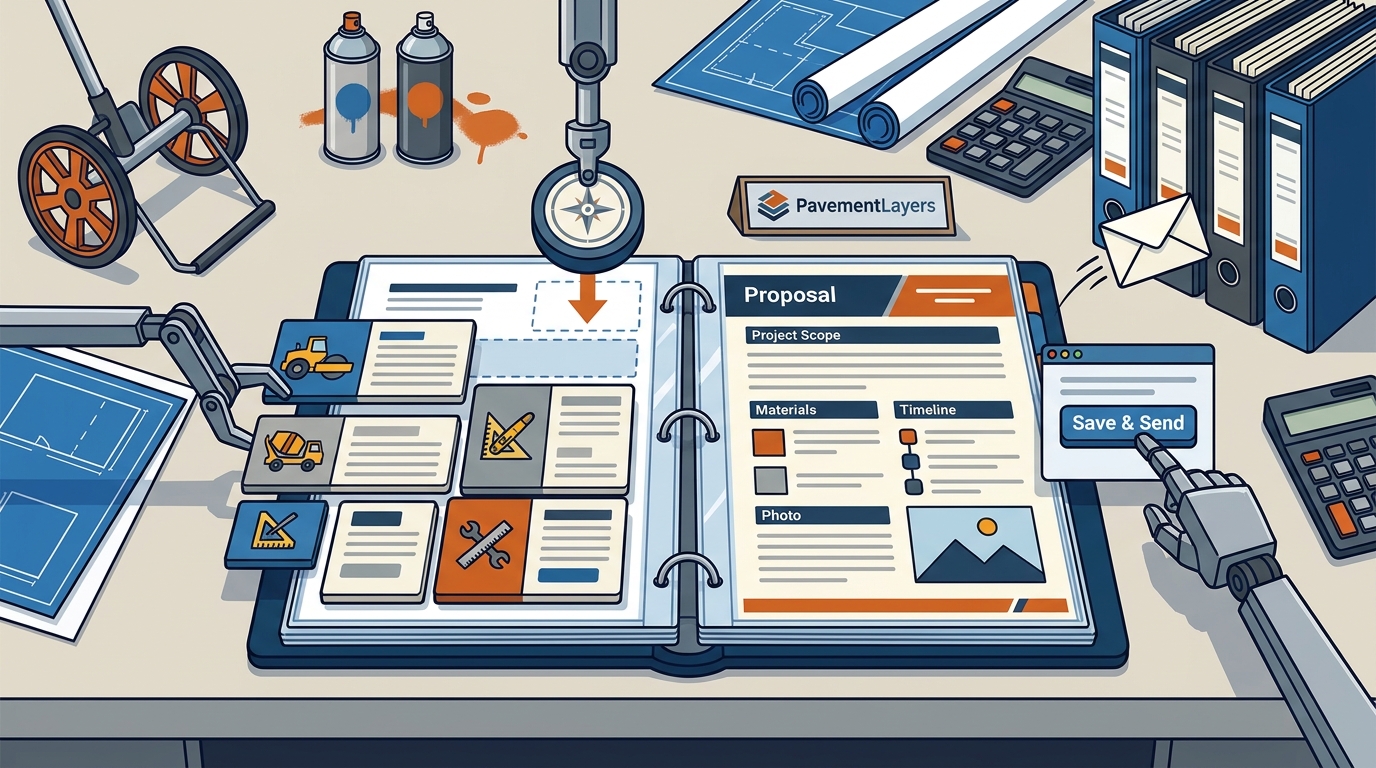
Customizable proposal templates save time by pre-populating standard line items, pricing structures, and company branding, allowing pavement professionals to generate professional documents in minutes rather than hours. PavementLayers, a cloud-based software solution based in Cincinnati, Ohio, enables users to create, organize, and send customized proposals with images that win better work faster. By automating the repetitive aspects of estimation, these tools reduce administrative burden and accelerate the sales cycle for paving and concrete companies. For additional details, review the Error 403 Forbidden.
The Cost of Manual Estimation
Traditional estimation methods often rely on spreadsheets or generic word processors, which require manual data entry for every new project. This process is not only slow but also prone to human error, such as incorrect unit pricing or missing line items. A single mistake in a manual estimate can lead to underbidding, which erodes profit margins, or overbidding, which causes lost contracts. The time spent correcting these errors further delays the proposal from reaching the client. For additional details, review the Error 403 Forbidden.
For a pavement company handling multiple bids per week, the cumulative hours spent on manual formatting and data entry are significant. Industry professionals often report spending several hours per estimate when starting from a blank document. This time could be better spent on site inspections, client relationship building, or project management. The inefficiency of manual processes creates a bottleneck in the sales pipeline, preventing companies from bidding on as many projects as they would like. For additional details, review the Error 403 Forbidden.
Furthermore, inconsistent formatting across different estimates can damage a company's professional image. Clients expect a polished, uniform presentation that reflects the quality of the work they are hiring for. When proposals look disorganized or outdated, it can signal a lack of attention to detail, which may influence the client's decision negatively. Standardizing the output is a critical first step in improving both speed and perception.
Standardizing Line Items and Pricing
A proposal template is a pre-built document structure that contains fixed sections for project details, scope of work, and pricing. In pavement software, these templates allow users to save specific line items, such as square footage of asphalt, tonnage of base material, or labor hours, as reusable components. When a new estimate is created, the user can simply select these pre-defined items rather than typing them from scratch. This standardization ensures that pricing remains consistent across all bids, reducing the risk of pricing errors.
Consider a commercial paving project that requires 5,000 square feet of asphalt, 10,000 square feet of base, and 200 linear feet of curb. In a manual system, the estimator must look up the current price for each material, calculate the total, and format the table. In a templated system, the estimator selects the 'Asphalt 5,000 sq ft' item, which automatically pulls the current price and description. This action takes seconds instead of minutes. The implication is that estimators can handle more bids in the same amount of time, increasing the company's capacity to pursue new business.
Additionally, templates can include conditional logic or variables that adjust pricing based on project size or location. For example, a template might automatically apply a volume discount for projects exceeding a certain threshold. This level of automation is difficult to achieve with manual spreadsheets but is a core feature of specialized pavement software. By embedding business rules into the template, companies ensure that every proposal reflects their current pricing strategy without manual intervention.
Enhancing Professionalism with Branding
Time savings are not the only benefit of using templates; they also enhance the professional quality of the proposal. A well-designed template includes the company logo, color scheme, and contact information, ensuring that every document looks on-brand. PavementLayers allows users to upload images and customize the visual layout, creating a document that stands out from generic competitors. This visual consistency reinforces brand recognition and builds trust with potential clients.
For instance, a proposal that includes high-quality photos of previous projects, a clear scope of work, and a professional layout is more likely to be taken seriously than a plain text document. The time spent designing a single template pays off every time it is used. Instead of spending time on graphic design for each new bid, the estimator can focus on the technical details of the estimate. This shift in focus allows the sales team to present a more compelling case to the client, potentially increasing win rates.
The ability to include images and detailed descriptions in a template also helps clarify the scope of work. Ambiguity in proposals can lead to disputes or change orders later in the project. By using a template that prompts for specific details, such as material specifications or warranty terms, companies can reduce misunderstandings. This clarity not only saves time in the long run by preventing disputes but also improves customer satisfaction and repeat business.
Accelerating the Sales Cycle
Speed is a critical factor in winning contracts, especially in competitive bidding environments. A proposal that is sent within 24 hours of a site visit is more likely to be considered than one that takes a week to prepare. Customizable templates enable pavement companies to respond quickly to Requests for Proposals (RFPs) and other bidding opportunities. This agility can be a decisive advantage when competing against larger firms with more resources.
For example, a municipal RFP might have a strict deadline for submission. A company using a templated system can generate the proposal, review it, and send it well before the deadline, allowing time for final checks. In contrast, a company using manual methods might struggle to meet the deadline, risking disqualification. The implication is that speed and reliability are key differentiators in the pavement industry. By leveraging software to streamline the proposal process, companies can position themselves as responsive and professional partners.
Moreover, faster proposal turnaround times improve the overall customer experience. Clients appreciate prompt responses and clear communication. When a company can provide a detailed, professional proposal quickly, it demonstrates efficiency and respect for the client's time. This positive experience can lead to stronger relationships and increased loyalty. Over time, these relationships can result in repeat business and referrals, which are valuable assets for any pavement company.
Key Takeaways
- Customizable templates reduce the time spent on data entry and formatting, allowing estimators to focus on project specifics.
- Standardized line items and pricing structures minimize errors and ensure consistency across all proposals.
- Branded templates enhance professional image and build trust with clients through visual consistency.
- Speed in proposal delivery is a competitive advantage, especially in tight bidding deadlines.
- Automated pricing rules and variables ensure that proposals reflect current business strategies without manual adjustment.
- Clear, detailed templates reduce ambiguity and potential disputes, improving long-term customer satisfaction.
Frequently Asked Questions
What is a proposal template in pavement software?
A proposal template is a pre-configured document structure that includes standard sections, pricing items, and branding elements, allowing users to generate customized proposals quickly.
How much time can templates save on estimates?
Templates can save several hours per estimate by eliminating manual data entry and formatting, enabling users to create proposals in minutes rather than hours.
Can templates be customized for different project types?
Yes, templates can be customized to include specific line items, pricing rules, and descriptions for different project types, such as residential, commercial, or municipal paving.
Do templates help with pricing accuracy?
Yes, by standardizing line items and embedding pricing rules, templates reduce the risk of human error and ensure that pricing is consistent and accurate.
Is it difficult to create a proposal template?
No, modern pavement software like PavementLayers provides user-friendly interfaces that allow users to create and customize templates without technical expertise.
How do templates improve win rates?
Templates improve win rates by enabling faster, more professional, and error-free proposals, which enhance the company's image and responsiveness to clients.
Conclusion
Customizable proposal templates are a powerful tool for pavement companies looking to streamline their estimation process and win more business. By standardizing line items, enhancing professionalism, and accelerating the sales cycle, these templates save time and reduce errors. PavementLayers provides a cloud-based solution that makes it easy to create and manage these templates, allowing you to focus on growing your business. To start saving time on your pavement estimates, explore the capabilities of PavementLayers today.