

The pavement industry operates on thin margins and tight schedules. A single lost bid can impact quarterly revenue significantly. According to industry benchmarks, professional contractors who utilize specialized estimation software see a measurable increase in win rates compared to those relying on manual processes. This guide details the critical components required to build proposals that win work, reduce administrative overhead, and streamline the transition from lead to invoice. (Paving Sealcoating Concrete Pavement)
Why Standard Proposals Fail to Convert
Many pavement contractors still rely on generic templates or manual spreadsheets. This approach creates significant bottlenecks. When estimates are produced manually, the risk of calculation errors increases. Furthermore, the time spent on formatting documents diverts resources from active sales activities. A professional proposal must reflect the precision of your field operations. If the paperwork appears disorganized, clients question the quality of your paving work. (Testimonials Pavement Layers Pavement)
Proposals made in minutes using automated tools allow sales teams to focus on relationship building rather than data entry. The difference between a lost bid and a won contract often comes down to speed and clarity. Clients want to see exactly what they are paying for, including specific materials, labor costs, and projected timelines. Without these details, trust erodes. Specialized software addresses these gaps by providing a structured framework for every estimate.
Core Estimation and Costing Features
Accurate costing is the foundation of any successful pavement proposal. The software must support detailed breakdowns for asphalt, concrete, sealcoating, and crack sealing. Real-time cost updates ensure that material price fluctuations do not eat into your profit margins. This capability is vital in an industry where fuel and aggregate costs can change rapidly.
Look for systems that include preloaded specifications for common services. These specifications should cover base repair, milling, infrared repairs, and line striping. Having these standards built into the platform reduces the time required to create a new estimate. It also ensures consistency across your team. Every proposal should reflect your company’s quality standards, regardless of which employee creates it.
Integration with accounting software is another non-negotiable feature. When your estimation tool connects directly with platforms like QuickBooks, the data flows seamlessly into your financial records. This integration eliminates double entry and reduces the likelihood of human error. It also accelerates the invoicing process once the job is awarded. The connection between estimation and accounting is where profitability is managed.
Visual Proposal Elements That Win Bids
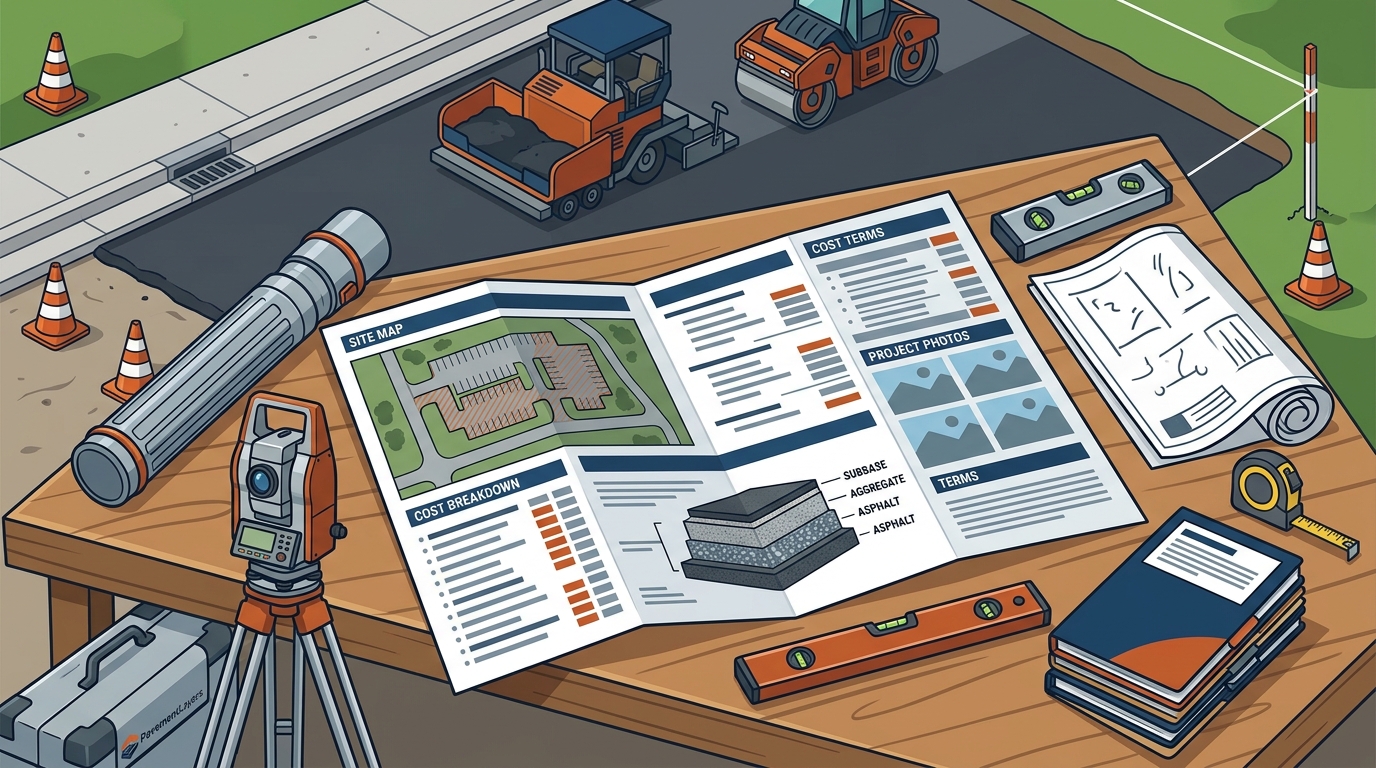
Visual clarity distinguishes a professional bid from a generic quote. Clients benefit from seeing the scope of work mapped out on site plans. Software that allows the upload of site photos and marked-up images helps clients visualize the project. This visual confirmation reduces ambiguity and builds confidence in your expertise.
Maps and driving directions should be included in work orders and proposals. This feature is particularly useful for clients who are not familiar with the site location. It also aids your field crews in navigating to the job site efficiently. The inclusion of insurance certificates and worker’s compensation documents within the proposal package demonstrates professionalism and compliance. It removes administrative hurdles for the client’s procurement team.
nCustomizable proposal templates allow you to brand every document with your company logo and contact information. This branding reinforces your identity at every touchpoint. The ability to send these proposals via email with tracking capabilities ensures that you know when the client has opened the document. This data point is crucial for follow-up strategies. Knowing when a proposal is viewed allows your sales team to time their outreach effectively.
Workflow Integration and CRM Capabilities
A proposal is only one part of the sales pipeline. The best pavement software functions as a comprehensive customer relationship management (CRM) system. It tracks prospects from the initial inquiry through to the final invoice. This tracking provides real-time visibility into the status of every lead. Sales managers can see which projects are open, closed, won, or lost without asking individual team members.
The transition from lead to work order must be seamless. Automated notifications alert the team when a new lead arrives or when a proposal is forwarded. This immediacy prevents leads from falling through the cracks. In a competitive market, speed is a significant advantage. Responding quickly to inquiries signals reliability and eagerness to serve.
Job costing is the final link in this chain. By comparing the estimated costs against the actual job costs, you gain valuable insights into your operational efficiency. This data helps you refine future estimates and improve profitability. The software should facilitate this comparison automatically, providing a clear view of financial performance. This feedback loop is essential for long-term business growth.
Pricing Models for Pavement Software
Investing in the right software requires understanding the cost structure. Most providers offer tiered pricing based on the number of users. This model allows businesses to scale their investment as they grow. Below is a comparison of typical pricing structures found in the industry.
| Business Size | User Range | Estimated Annual Cost Per User | Key Features Included |
|---|---|---|---|
| Small Business | 1-5 Users | $2,500 | Full CRM, Estimation, QuickBooks Integration |
| Medium Business | 6-20 Users | $2,200 | Advanced Reporting, API Access, Priority Support |
| Large Business | 21+ Users | $1,900 | Custom Integrations, Dedicated Account Manager |
Office staff, such as secretaries or controllers, may have separate pricing tiers. It is important to clarify these costs during the selection process. The return on investment is often realized within the first few projects. The time saved on administrative tasks and the increase in win rates typically offset the subscription cost quickly.
Key Takeaways
- Speed to Market: Automated proposals can be created in under five minutes, allowing for faster response times to client inquiries.
- Visual Impact: Including site maps, photos, and marked-up zones significantly increases client confidence and bid acceptance rates.
- Financial Accuracy: Real-time integration with accounting software ensures that estimates align with actual financial records.
- Pipeline Visibility: Real-time tracking of won, lost, and open projects provides immediate insight into sales team performance.
- Scalable Pricing: Tiered pricing models allow businesses to adjust costs based on user count, with discounts for larger teams.
- Operational Efficiency: Preloaded specifications for paving, milling, and sealcoating reduce manual data entry errors.
- Rapid Onboarding: Most systems can be fully set up in less than two hours, minimizing downtime during implementation.
Frequently Asked Questions
What is the primary benefit of using specialized pavement software?
The primary benefit is the ability to create accurate, visually compelling proposals quickly. This speed and quality lead to higher win rates and reduced administrative burden.
How long does it take to produce a proposal with this software?
After initial training, producing a comprehensive proposal takes less than five minutes. The first proposal may take slightly longer as you familiarize yourself with the interface.
Does the software integrate with QuickBooks?
Yes, most modern pavement management systems offer one-click integration with both QuickBooks Desktop and QuickBooks Online. This ensures seamless data flow between estimation and accounting.
Can I customize the specifications in the software?
Absolutely. While preloaded specifications are provided for common services, you can modify or replace them with your own company standards to ensure accuracy.
Is there a free trial available?
Yes, a 14-day free trial is typically available. This allows you to test the features, including proposal creation and CRM tracking, before committing to a subscription.
What devices can be used to access the software?
The software is cloud-based and accessible from any internet-connected device. This includes laptops, PCs, Macs, iPads, and smartphones, enabling field-to-office connectivity.
How does the software help with job costing?
It tracks actual costs against estimated costs in real time. This comparison helps identify variances and improves the accuracy of future bids.
Start Your Free Trial
Transform your bidding process and win more work. Start your 14-day free trial today and experience the difference of a complete pavement management solution. Join hundreds of firms across North America who have streamlined their operations with Pavement Layers.