

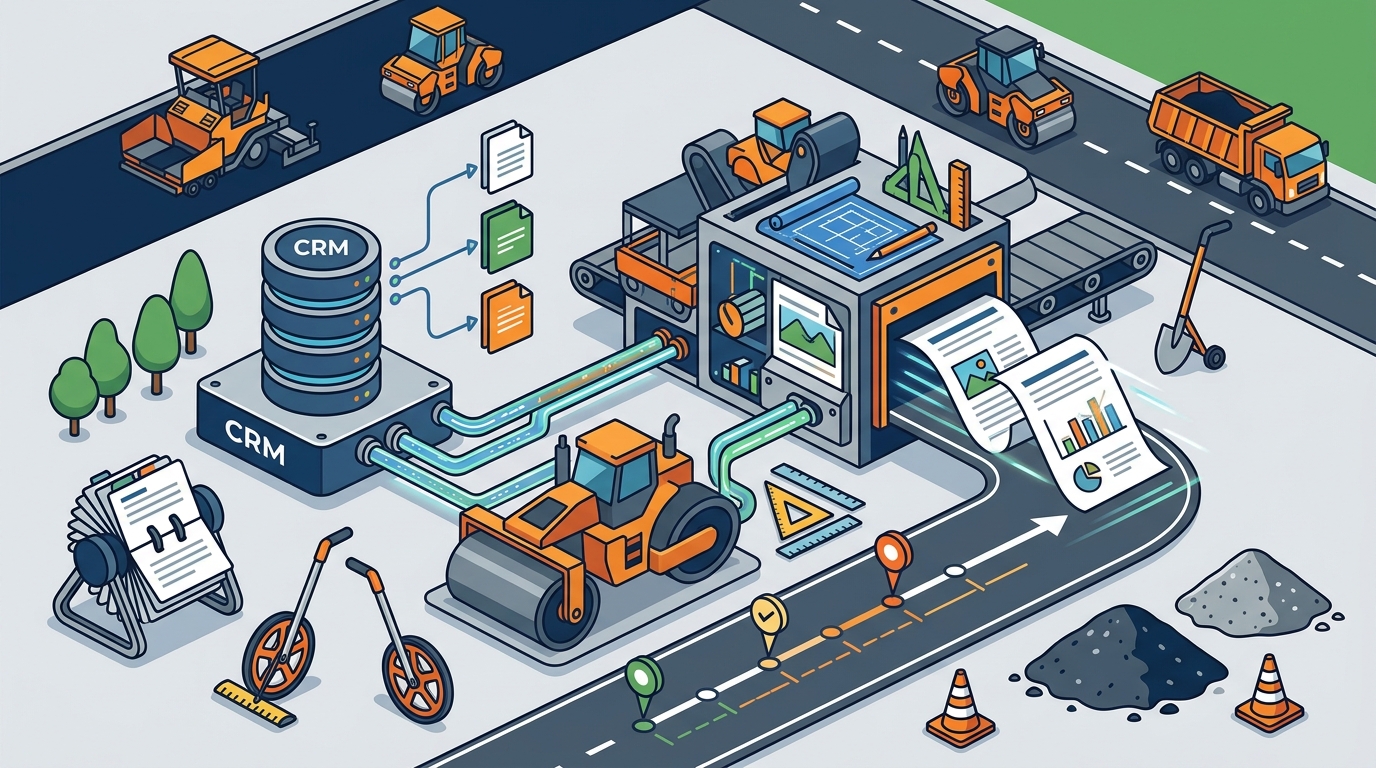
Connecting your CRM to pavement proposal software eliminates manual data entry and ensures every prospect interaction is captured automatically. This integration allows sales teams to generate customized, image-rich proposals in minutes rather than hours. By syncing customer data, PavementLayers enables pavement companies to streamline their workflow from initial lead to final job cost, reducing errors and accelerating the sales cycle. For additional details, review the Objections Pavement Layers Pavement.
The Impact of Data Synchronization on Sales Speed
Manual data entry is the primary bottleneck in pavement sales. When a sales representative updates a prospect in a standalone CRM, that information often does not flow into the proposal tool. This disconnect forces staff to re-enter addresses, project scopes, and client preferences. PavementLayers addresses this by integrating directly with your existing systems. This ensures that when a lead is created, the proposal builder already has the necessary context. The result is a significant reduction in the time spent preparing documents. Sales teams can focus on closing deals rather than formatting text.
Automating the Prospect to Proposal Pipeline
A robust CRM integration transforms the sales pipeline into a continuous flow. In the pavement industry, the journey from prospect to lead to estimate is critical. Without automation, these stages are often siloed. PavementLayers connects these stages by pulling real-time data from your CRM. When a lead is qualified, the system can automatically trigger a proposal draft. This automation ensures that no opportunity is left stagnant. It also provides visibility into the status of every project. Managers can see exactly where each deal stands in the pipeline without asking for status updates.
Enhancing Proposal Customization with Client History
Generic proposals rarely win competitive bids. Clients expect solutions tailored to their specific property and history. A connected CRM provides a rich history of past interactions and completed projects. PavementLayers uses this data to pre-populate proposal templates with relevant details. For example, if a client previously had a sealcoating project, the system can reference that history. This level of personalization builds trust and demonstrates expertise. It also allows for the inclusion of specific images and measurements from previous visits. This makes the proposal feel like a bespoke service rather than a mass-produced document.
Improving Accuracy and Reducing Human Error
Human error in data entry can lead to costly mistakes in pavement projects. Incorrect addresses or misinterpreted scope details can delay work orders. By automating the transfer of data from the CRM to the proposal tool, you eliminate these risks. PavementLayers ensures that the data used in the proposal is the same data used in your sales tracking. This consistency is vital for accurate job costing. It also simplifies the handoff to the field crews. When the proposal is accepted, the work order is generated with the correct details. This reduces the need for back-and-forth communication between the office and the field.
Strategic Benefits for Pavement Business Growth
Connecting your CRM is not just about saving time; it is about strategic growth. With automated proposal generation, your sales team can handle a higher volume of leads. This capacity allows you to pursue more opportunities without hiring additional administrative staff. The data collected through this process also provides valuable insights. You can analyze which types of proposals win and which lose. This information helps refine your pricing and service offerings. Ultimately, a well-integrated system supports scalable growth for pavement companies of all sizes.
Key Takeaways
- CRM integration eliminates manual data entry, saving significant time for sales teams.
- Automated pipelines ensure that no leads are missed or left stagnant.
- Client history from the CRM enables highly personalized and customized proposals.
- Data synchronization reduces human error in addresses and project scopes.
- Accurate data handoff to work orders improves field operations and customer satisfaction.
- Scalable proposal automation allows businesses to handle more leads without extra staff.
Frequently Asked Questions
What is CRM integration in pavement software?
CRM integration is the process of connecting your customer relationship management system with your proposal software to share data automatically.
Does PavementLayers integrate with popular CRMs?
Yes, PavementLayers is designed to integrate with most market-leading systems via API, ensuring seamless data flow.
How long does it take to set up the integration?
Setup is typically quick, with complete configuration often taking less than two hours with included support.
Can I customize the proposals generated from CRM data?
Yes, you can fully customize proposals, adding images, specifications, and branding while using pre-populated CRM data.
Does this integration help with tracking sales performance?
Yes, it provides real-time tracking of won, lost, and open projects, giving managers clear visibility into sales performance.