

Cost Savings and ROI Strategies for Pavement Companies Using Cloud Software
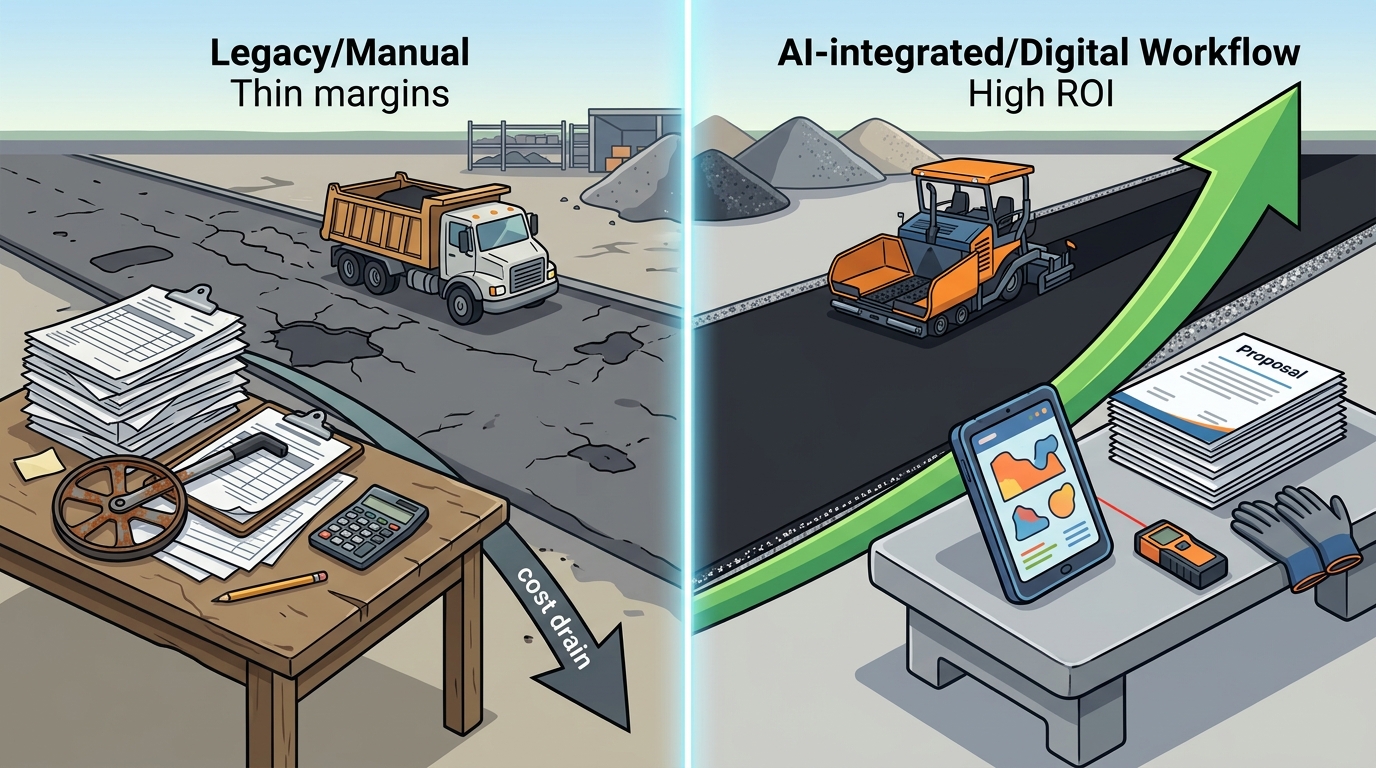
The construction industry operates on razor-thin margins where a single mismanaged job can erase quarterly profits. According to recent industry data, construction firms that adopt integrated digital workflows see an average revenue growth of 15% compared to those relying on legacy systems. This statistic highlights a critical shift in how pavement contractors manage their operational overhead. The transition from paper-based estimates to cloud-based management platforms is no longer optional for companies aiming to scale. It is a fundamental requirement for survival in a competitive market.
Understanding Cloud ROI in Pavement Management
Return on investment in software is often misunderstood as a simple calculation of license fees versus paper costs. In reality, the true value lies in the elimination of administrative bottlenecks. Cloud software for pavement companies provides a centralized hub for estimating, scheduling, and invoicing. This integration reduces the time project managers spend on manual data entry by up to 40%.
When you eliminate duplicate data entry, you reduce the risk of costly errors. A single incorrect material quantity on a bid can lead to significant losses on the job site. By using automated estimation tools, you ensure that your bids are accurate and competitive. This accuracy directly impacts your win rate and overall profitability.
Furthermore, cloud-based solutions offer scalability. As your company grows, your software grows with you. You do not need to invest in expensive on-premise servers or hire IT staff to maintain hardware. This operational flexibility allows you to allocate capital toward equipment and talent instead of IT infrastructure.
Reducing Overhead Costs Through Automation
One of the most significant drivers of cost savings is the automation of repetitive tasks. Manual invoicing, for example, can take hours to complete. With cloud software, invoices are generated automatically upon job completion. This speed improves cash flow by reducing the days sales outstanding (DSO).
Consider the cost of lost productivity. When field supervisors spend their day on the phone coordinating with the office, that is time taken away from managing the job site. Cloud platforms enable real-time communication between the field and the office. Supervisors can update job statuses, request materials, and report issues instantly. This seamless connectivity ensures that projects stay on schedule and within budget.
Another area of significant savings is inventory management. Cloud software tracks material usage in real time. This visibility prevents over-ordering and reduces waste. You can also identify trends in material consumption, allowing you to negotiate better rates with suppliers. These small savings compound over time, leading to substantial annual cost reductions.
Improving Field Efficiency and Communication
Effective communication is the backbone of any successful pavement company. Miscommunication between the office and the field is a leading cause of project delays and cost overruns. Cloud software bridges this gap by providing a single source of truth for all project data.
Field teams can access project plans, specifications, and change orders from their mobile devices. This immediate access reduces the need for back-and-forth calls and emails. It also ensures that everyone is working with the most current information. This level of transparency is crucial for maintaining quality control and meeting client expectations.
Additionally, cloud platforms often include features for time tracking and labor management. By accurately tracking labor hours, you can identify inefficiencies and optimize crew assignments. This data-driven approach to labor management helps you control one of the largest expenses in the pavement industry.
Leveraging Data for Strategic Decisions
Data is a powerful asset for pavement companies. Cloud software collects vast amounts of data on project performance, profitability, and resource utilization. By analyzing this data, you can make informed decisions that drive growth.
For example, you can identify which types of projects are most profitable. This insight allows you to focus your marketing efforts on high-value opportunities. You can also analyze the performance of different crews to identify best practices and areas for improvement.
Moreover, cloud software provides real-time financial visibility. You can monitor project costs against budgets in real time. This proactive approach allows you to address issues before they become costly problems. It also enables you to provide accurate financial reports to stakeholders, building trust and confidence in your management.
Choosing the Right Platform for Your Business
Selecting the right cloud software is a critical decision. It requires careful consideration of your specific needs and business goals. Here is a comparison of key features to look for in a pavement management platform.
| Feature | Benefit | Impact on ROI |
|---|---|---|
| Integrated Estimating | Reduces bid errors and speeds up proposal generation. | Higher win rates and reduced administrative costs. |
| Mobile Field Access | Enables real-time updates and communication. | Fewer delays and improved project efficiency. |
| Automated Invoicing | Accelerates payment cycles and reduces DSO. | Improved cash flow and reduced collection efforts. |
| Real-Time Analytics | Provides visibility into project performance. | Better decision-making and cost control. |
When evaluating platforms, consider the user experience. A complex system that is difficult to use will not be adopted by your team. Look for a solution that is intuitive and easy to implement. Also, consider the level of support provided by the vendor. Responsive customer service is essential for minimizing downtime and ensuring a smooth transition.
Key Takeaways
- Cloud software reduces administrative overhead by automating manual tasks like invoicing and scheduling.
- Real-time data access improves field efficiency and reduces communication errors.
- Accurate estimating tools help secure more profitable bids and reduce project losses.
- Integrated platforms provide a single source of truth for all project stakeholders.
- Data analytics enable strategic decision-making and resource optimization.
- Scalability allows pavement companies to grow without proportional increases in IT costs.
- Choosing the right platform requires evaluating user experience, support, and specific feature sets.
Frequently Asked Questions
How does cloud software improve cash flow for pavement companies?
Cloud software improves cash flow by automating invoicing and accelerating payment cycles. When invoices are generated instantly upon job completion, you reduce the time it takes to get paid. This faster turnaround improves your days sales outstanding and ensures a steady stream of revenue.
What are the main benefits of using mobile apps in the field?
Mobile apps allow field supervisors to access project data, update job statuses, and communicate with the office in real time. This immediacy reduces delays and ensures that everyone is working with the most current information. It also eliminates the need for manual data entry, reducing errors.
How can data analytics help me make better business decisions?
Data analytics provide visibility into project performance, profitability, and resource utilization. By analyzing this data, you can identify trends, optimize crew assignments, and focus on high-value projects. This data-driven approach leads to more informed and profitable decisions.
Is cloud software secure for sensitive business data?
Yes, reputable cloud providers implement robust security measures, including encryption and regular backups. These measures protect your data from unauthorized access and loss. It is important to choose a provider with a strong track record of security and compliance.
What should I look for when choosing a pavement management platform?
Look for a platform that offers integrated estimating, mobile field access, automated invoicing, and real-time analytics. Also, consider the user experience, ease of implementation, and the level of support provided by the vendor.
How long does it take to implement cloud software?
Implementation time varies depending on the size of your company and the complexity of your workflows. However, most cloud platforms are designed for quick deployment. With proper planning and training, you can be up and running in a matter of weeks.
Can cloud software integrate with my existing accounting software?
Yes, many cloud platforms offer integrations with popular accounting software like QuickBooks and Xero. These integrations ensure that your financial data is synchronized across all systems, reducing manual entry and errors.
Ready to Transform Your Pavement Business?
Stop letting inefficiencies drain your profits. Discover how Pavement Layers can help you streamline your operations and maximize your ROI. Contact us today to schedule a demo and see the difference cloud software can make for your company.