

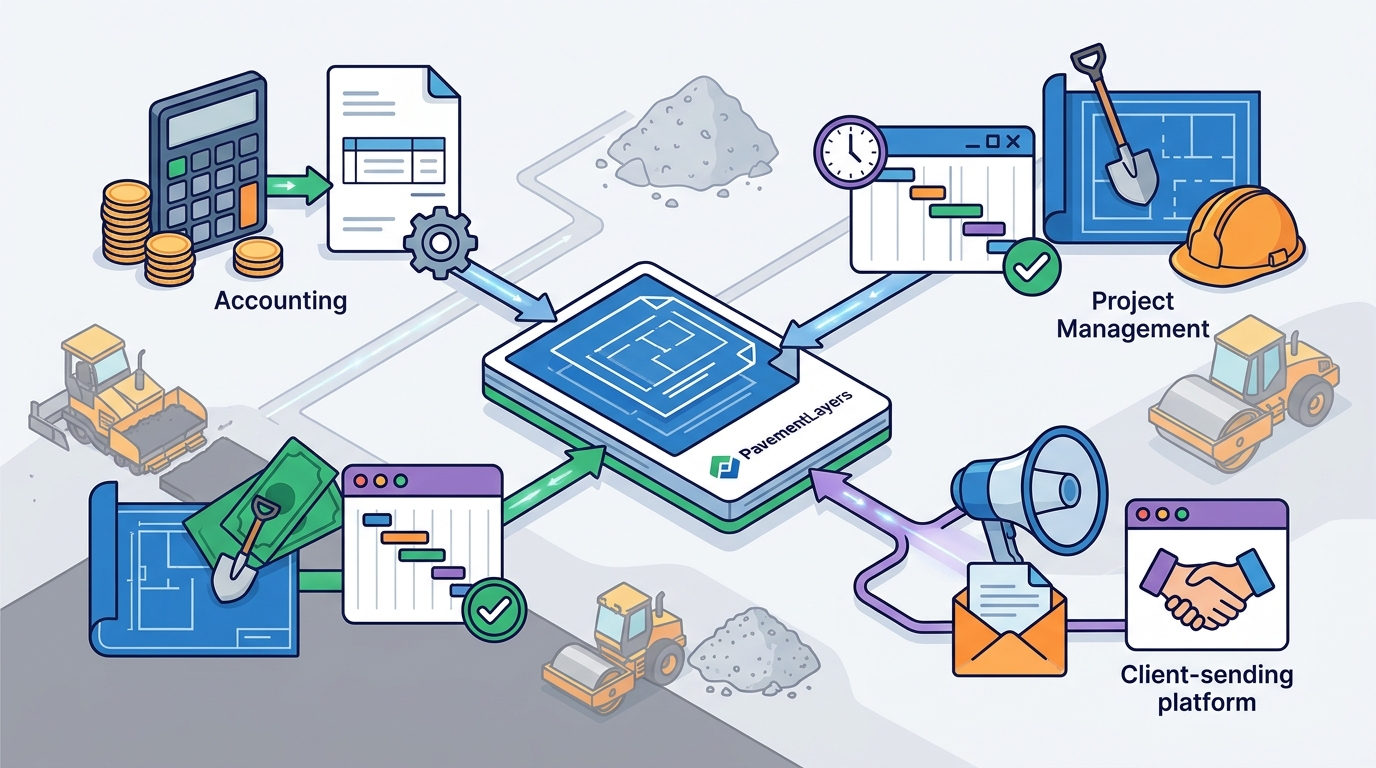
Effective pavement estimation relies on seamless data exchange between specialized software and core business systems. PavementLayers supports this workflow by connecting proposal creation with accounting, project management, and communication platforms. This integration ensures that estimates remain accurate, proposals are sent quickly, and operational data stays synchronized across your team.
The Role of Accounting and Finance Systems
Accounting software is the financial backbone of any paving company. It is the system that records revenue, tracks expenses, and manages cash flow. When your estimation tool connects directly to your accounting platform, it eliminates manual data entry and reduces the risk of billing errors. This connection allows you to pull historical cost data directly into new estimates, ensuring that your pricing reflects current material and labor costs.
For example, if asphalt prices fluctuate, an integrated system can update your cost database automatically. This means your estimates remain competitive without requiring constant manual adjustments. The implication is a more stable profit margin and less time spent reconciling financial records at the end of the month. PavementLayers facilitates this by allowing users to export proposal data in formats that are easily imported into standard accounting suites.
Project Management and Scheduling Platforms
Project management software is the digital hub for coordinating crews, equipment, and timelines. It is the tool that tracks job progress from start to finish. Estimation tools must work with these platforms to ensure that the scope of work defined in a proposal matches the actual project plan. This alignment prevents scope creep and ensures that the resources allocated in the estimate are available when needed.
Communication and Proposal Delivery Channels
Communication software is the bridge between your internal team and your clients. It is the channel through which proposals are delivered, reviewed, and approved. Modern estimation tools need to integrate with email, cloud storage, and client portal systems to streamline this process. This integration allows for faster turnaround times and a more professional client experience. It also provides a clear audit trail of when a proposal was sent and when it was accepted.
For instance, sending a proposal via a secure client portal allows the customer to view the document on any device. This accessibility can significantly reduce the time between proposal submission and contract signing. The implication is a higher win rate and a more efficient sales cycle. PavementLayers is designed to support this by enabling users to send customized proposals with images directly to clients, ensuring that the presentation is both professional and easy to access.
Material and Supply Chain Databases
Supply chain software is the system that manages inventory, vendor relationships, and material procurement. It is the tool that ensures you have the right materials at the right time. Estimation tools must connect with these databases to access real-time pricing and availability data. This connection is critical for accurate cost estimation, especially in a market where material prices can change rapidly.
Take concrete as an example. The cost of cement and aggregates can vary by region and season. If your estimation tool relies on outdated price lists, your bids may be uncompetitive or unprofitable. By integrating with supply chain databases, you can access current vendor quotes directly within your estimation software. This ensures that your estimates reflect the true cost of materials. The result is a more accurate bid that is both competitive and profitable.
Document Management and Compliance Archives
For example, if a dispute arises over a past project, having a complete and organized archive of the original proposal and all related documents is essential. This documentation can protect your company legally and financially. The implication is reduced risk and greater confidence in your business practices. By ensuring that your estimation tool works with your document management system, you create a robust framework for compliance and record-keeping.
Key Takeaways
- Accounting software integration ensures financial accuracy and reduces manual data entry errors.
- Project management platforms align operational plans with financial estimates to prevent scope creep.
- Communication channels streamline proposal delivery and improve client engagement.
- Supply chain databases provide real-time material pricing for accurate cost estimation.
- Seamless integration between these systems creates a single source of truth for your business operations.
Frequently Asked Questions
What is the most critical software integration for pavement estimation?
Accounting software integration is often the most critical because it directly impacts financial accuracy and profitability. It ensures that cost data is current and that billing is accurate.
How does project management software interact with estimation tools?
Project management software receives the scope and resource plan from the estimation tool. This ensures that the operational plan matches the financial model of the proposal.
Why is supply chain integration important for paving companies?
Supply chain integration provides real-time material pricing and availability data. This is essential for creating accurate and competitive bids in a volatile market.
Can PavementLayers integrate with any accounting software?
PavementLayers is designed to export data in standard formats that can be imported into most major accounting platforms. This flexibility allows you to maintain your existing financial systems.
How does document management support compliance in the paving industry?
Document management systems store all project-related files securely. This ensures that your company can meet regulatory requirements and maintain a complete audit trail.
What is the benefit of integrating communication software with estimation tools?
Communication software integration allows for faster proposal delivery and a more professional client experience. This can lead to higher win rates and shorter sales cycles.
How can I ensure my estimation tool works with my existing software stack?
Conclusion
Successful pavement estimation requires more than just a standalone tool. It demands a cohesive ecosystem of software that works together seamlessly. By integrating your estimation platform with accounting, project management, communication, supply chain, and document management systems, you create a robust foundation for business growth. PavementLayers is designed to support this integrated approach, helping you win better work faster. To see how these integrations can transform your workflow, explore PavementLayers today.