

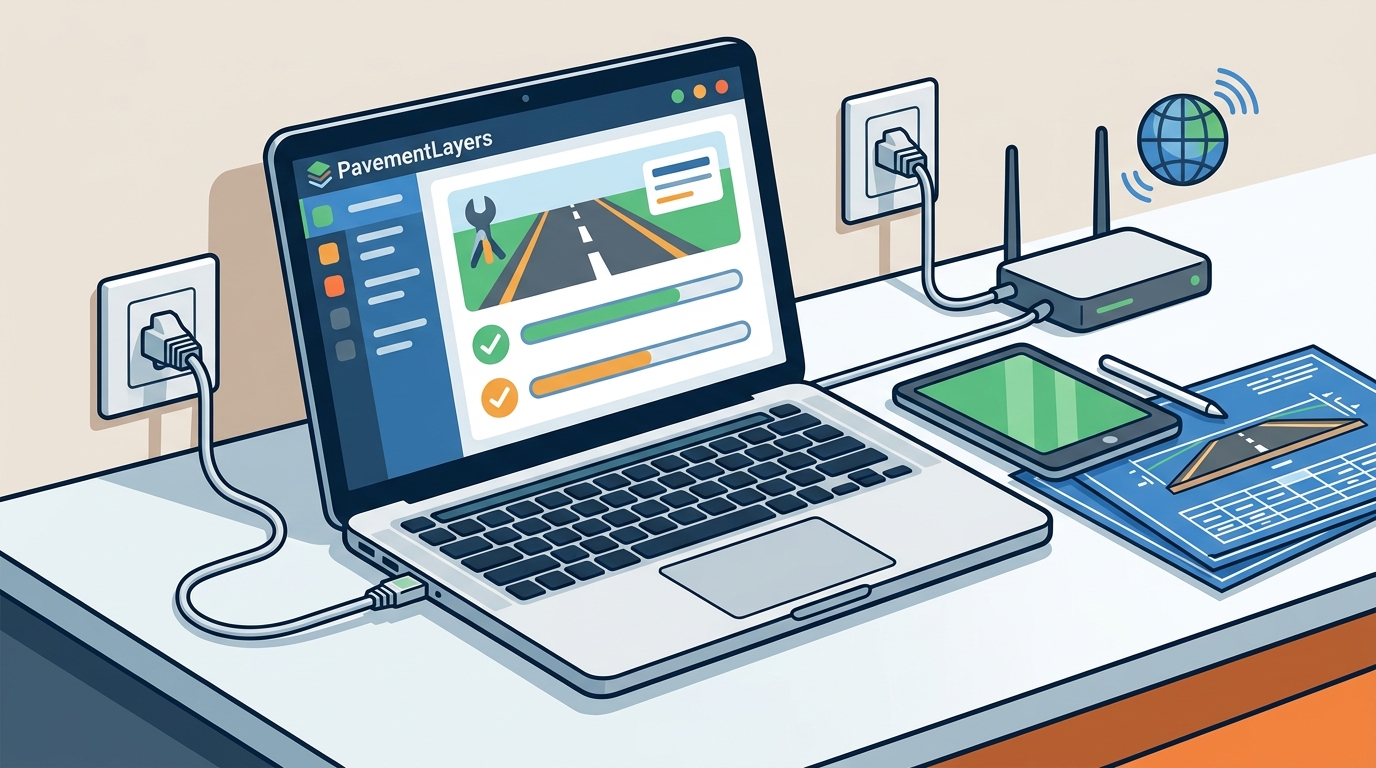
Modern pavement estimation software requires a stable internet connection, a modern web browser, and a standard desktop or laptop computer. It does not require heavy local hardware or complex server infrastructure. This guide covers the specific technical needs, verification steps, and operational workflows for running cloud-based tools like PavementLayers. For additional details, review the Error 403 Forbidden.
How to Choose: Separating Good Options from Bad Ones
Browser Compatibility
Mobile Accessibility
What to Ask: Specific Questions Before Committing
Data Ownership and Export
Ask explicitly who owns the data. The answer should be you. Confirm that you can export all client data and proposal information. This ensures that you are not locked into the platform. If you decide to leave, you must be able to take your history with you. This is a non-negotiable requirement for any serious business tool.
Security Protocols
Inquire about the security measures in place. Ask if the connection uses SSL technology. This ensures that data is encrypted during transmission. Ask about user authentication methods. You need unique user names and passwords for each team member. This prevents unauthorized access to your proprietary data.
How to Verify: Checking Claims and Credentials
Testing the Trial
The best way to verify performance is to use a trial. Most reputable providers offer a free trial period. Use this time to test the software with your real data. Upload your actual project files and images. See how the system handles them. Check the speed of the interface. If the trial feels slow or buggy, the paid version will likely be the same. This hands-on verification is more valuable than any marketing brochure.
How It Works: The Operational Workflow
Understanding the workflow helps you set realistic expectations. The process begins with creating a new proposal. You input the project details and upload images. The software organizes this information into a professional document. You then review and send the proposal to the client. The system tracks the status of the proposal. You can see when the client opens it and when they respond. This tracking is essential for follow-up. The entire process is designed to be faster than manual methods. Users report creating proposals significantly faster with these tools. This speed allows you to respond to bids quickly. In the pavement industry, speed often wins the job. The software automates the tedious parts of the process. It handles the formatting and organization. You focus on the content and the client relationship.
Step-by-Step Process
First, you log in to the secure portal. Second, you select a template or start a new proposal. Third, you add the project details and images. Fourth, you review the document for accuracy. Fifth, you send it to the client via email. Sixth, you monitor the status in the dashboard. This linear process is intuitive and requires minimal training. Most users can become proficient within a few days of use.
What It Costs: Factors That Drive Price
Hidden Costs
What Goes Wrong: Common Mistakes and Avoidance
Users often make mistakes that reduce the effectiveness of the software. One common mistake is not updating the browser. Outdated browsers can cause compatibility issues. Always keep your software up to date. Another mistake is failing to back up data. While the provider hosts your data, you should still export it regularly. This is a simple procedure that ensures you have a local copy. You can export all client data and proposal information as a CSV or XLS file. Do this as a routine to back up your data. A third mistake is not training the team. If your team does not know how to use the tool, they will not use it. Invest time in training. Ensure everyone understands the workflow. This maximizes the return on your investment.
Security Risks
Security risks arise from poor password practices. Use strong, unique passwords for each user. Do not share logins. Each user should have a unique user name and password. This ensures accountability and security. The system issues a session cookie to record encrypted authentication information. This cookie does not include the username or password. It is used only for the duration of the specific session. This design enhances security by minimizing the data stored in the browser.
Versus Alternatives: Comparing Options
| Feature | General Word Processor | Spreadsheet Software | Dedicated Pavement Software |
|---|---|---|---|
| Industry Specificity | Low | Low | High |
| Proposal Speed | Slow | Medium | Fast |
| Image Handling | Manual | Manual | Automated |
| Learning Curve | Low | Medium | Low |
For a Specific Situation: Small Crews vs. Large Companies
The requirements change slightly depending on the size of your operation. For a small crew, simplicity is key. You need a tool that is easy to learn and use. You do not need complex reporting features. You need speed and reliability. A cloud-based tool is ideal because it requires no local server. You just need a computer and an internet connection. For a larger company, you need scalability. You need multiple users with different permissions. You need robust data management. You need the ability to export large datasets. The software must handle the volume of proposals generated by a large team. It must also ensure that data is secure and accessible to the right people. The core requirements remain the same: a stable internet connection and a modern browser. The difference is in the scale of usage and the complexity of the data management.
Remote Work Considerations
For teams that work remotely, internet stability is paramount. You need a reliable connection to access the software. If your internet is unstable, the software will not work well. Consider having a backup connection. This ensures that you can always access your data. Cloud-based tools are ideal for remote work because they are accessible from anywhere. You do not need to be in the office to create a proposal. This flexibility is a major benefit of modern software.
Rules and Protections: Data Privacy and Security
There are specific rules and protections that apply to your data. The provider should have a clear privacy policy. This policy outlines how your data is collected, used, and protected. You should read this policy carefully. It should state that the provider does not disclose your personal information to other companies. It should state that they do not sell your name or email address to direct-marketing companies. The provider should use advanced technology for internet security. This includes SSL technology and server authentication. Your data should be protected using data encryption. This ensures that your data is safe, secure, and available only to registered users in your company. Your data should be completely inaccessible to your competitors. These protections are essential for maintaining trust and confidentiality.
Legal Compliance
Ensure that the provider complies with relevant data protection laws. This includes laws that govern the handling of personal and business data. The provider should have measures in place to prevent data breaches. They should have a plan for responding to incidents. This demonstrates their commitment to security. You should also ensure that the contract clearly defines the ownership of the data. You own your data. The provider is merely a custodian. This distinction is important for legal and business reasons.
Local Specifics: Cincinnati and Regional Considerations
Connectivity Testing
Perform a connectivity test in your office and in the field. Use a speed test tool to measure your upload and download speeds. Compare these speeds to the requirements of the software. If your speeds are below the recommended levels, take steps to improve them. This may involve changing your internet plan or using a different connection. This proactive approach prevents frustration and downtime.
Timing: When to Act and How It Affects Outcomes
Timing is critical when adopting new software. You should act when you are ready to change your workflow. Do not adopt the software in the middle of a busy season. This can cause stress and reduce adoption. Instead, choose a quieter period. This allows you to focus on learning the tool. You should also time your adoption to align with your business goals. If you want to increase your win rate, adopt the software before the peak bidding season. This gives you time to master the tool. You can then use it to its full potential. The timing of your adoption can significantly impact your results. By choosing the right time, you maximize the benefits of the software.
Seasonal Considerations
Pavement work is often seasonal. There are busy periods and slow periods. Use the slow periods to implement new tools. This minimizes the disruption to your operations. You can train your team and refine your processes without the pressure of immediate deadlines. This strategic timing ensures a smoother transition. It also allows you to identify and resolve any issues before the busy season begins.
Results Over Time: Measurable Outcomes
The results of using pavement estimation software are measurable. You can track your win rate over time. You can measure the time it takes to create a proposal. You can track the number of proposals sent. These metrics provide a clear picture of the software's impact. Users report creating proposals significantly faster with these tools. This speed allows you to send more proposals. It also allows you to respond to bids quickly. This can lead to an increase in win rates. The software also helps you organize your data. This makes it easier to find past proposals and client information. This organization saves time and reduces errors. Over time, these small improvements add up to significant benefits. You can use these metrics to justify the cost of the software. You can also use them to identify areas for further improvement.
Long-Term Benefits
Key Takeaways
- Modern pavement estimation software requires a stable internet connection and a modern web browser.
- It does not require heavy local hardware or complex server infrastructure.
- You must verify security claims by checking for SSL encryption and secure server environments.
- Always ensure you can export your data as a CSV or XLS file at any time.
- The cost is driven by the number of users and the feature set.
- Common mistakes include not updating the browser and failing to back up data.
- Dedicated software offers better speed and specificity than general-purpose tools.
- Timing your adoption to a quieter period can improve adoption and results.
Frequently Asked Questions
What are the minimum system requirements for PavementLayers?
The minimum requirements are a standard desktop or laptop computer and a modern web browser. You also need a stable internet connection. The software is cloud-based, so it does not require specific local hardware.
Do I need to install any software on my computer?
No, you do not need to download or install any software. The platform is accessed via a web browser. This makes it easy to use and update.
Is my data secure?
Yes, your data is protected using industry-standard SSL technology and data encryption. The data is hosted in a secure server environment with advanced firewalls.
Can I export my data if I decide to leave?
Yes, you can export all of your data at any point in time. You can export client data and proposal information as a CSV or XLS file.
How long does it take to learn the software?
Most users can become proficient within a few days. The interface is designed to be simple and intuitive. The software provides a proven sales process that guides you through the steps.
Does the software work on mobile devices?
Yes, the platform is accessible via a web browser on mobile devices. This allows you to review proposals or update statuses from the field.
What browsers are recommended?
We recommend the most recent versions of major desktop browsers. Other browsers will work as well, but you may experience more issues with updates.