

Cloud Scheduling Tools for Pavement Crews: Staying Organized and On Time
Cloud scheduling tools help pavement crews stay organized and on time by centralizing job details, real-time updates, and communication in one accessible platform. This eliminates the delays and errors caused by fragmented paper-based or siloed digital systems. For pavement companies, this means fewer missed appointments, reduced idle time, and higher customer satisfaction. PavementLayers supports this workflow by integrating scheduling with its broader proposal and work order management system, ensuring that the transition from estimate to execution is seamless and data-driven. For additional details, review the Paving Sealcoating Concrete Pavement.
The Cost of Fragmented Scheduling in Pavement Operations
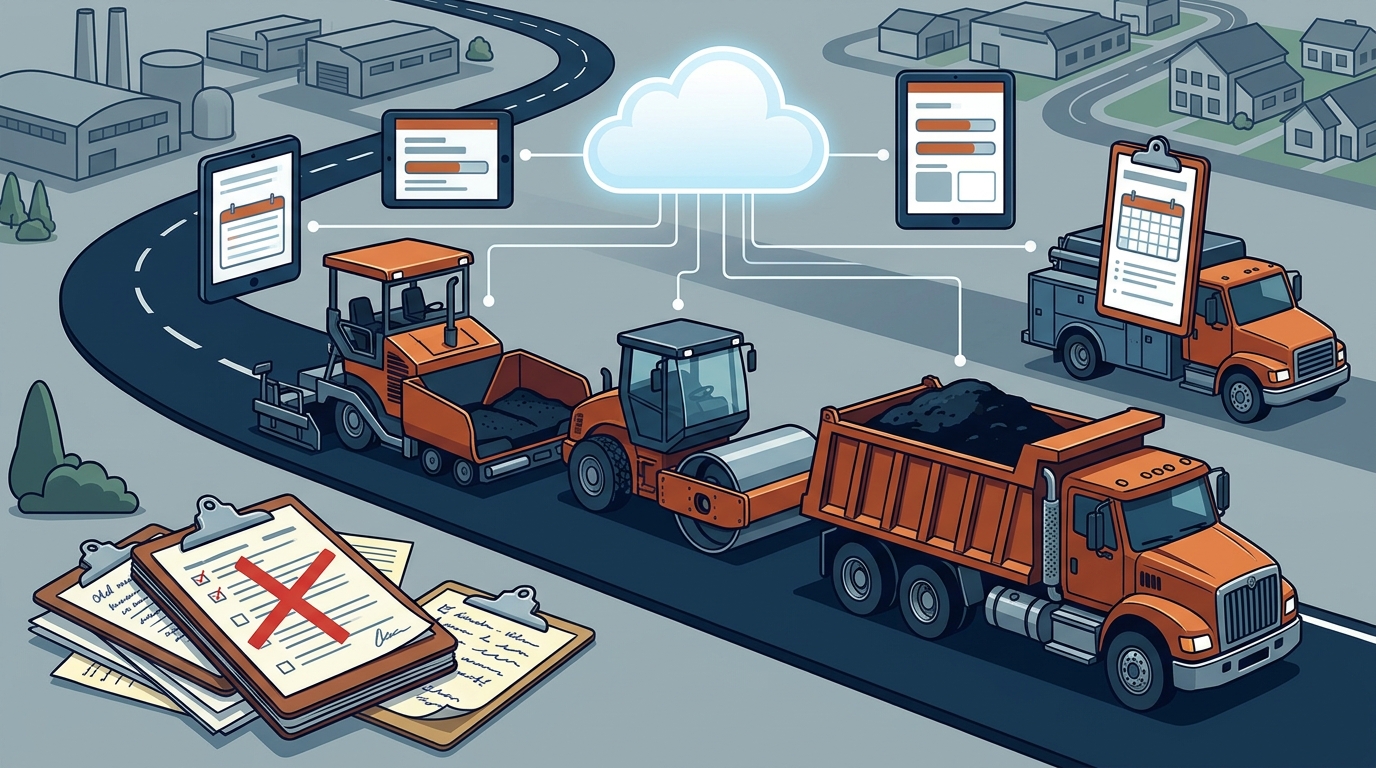
Traditional scheduling in the pavement industry often relies on a mix of whiteboards, spreadsheets, and phone calls. This fragmentation creates a significant operational risk. When a crew chief receives a job change via text while the office updates a spreadsheet, the two sources of truth diverge. This leads to dispatch errors, where a crew is sent to the wrong location or arrives without the correct materials. The result is wasted fuel, labor hours, and customer frustration. A centralized cloud system ensures that every stakeholder, from the office manager to the field crew, views the same live data. This single source of truth is the foundation of on-time performance.
Real-Time Visibility and Dynamic Dispatching
Cloud-based scheduling provides real-time visibility into crew status and job progress. Unlike static schedules, dynamic dispatching allows managers to adjust assignments based on current conditions. For example, if a crew finishes a sealcoating job early, the system can immediately reassign them to a pending asphalt patch job nearby. This agility reduces deadhead miles and maximizes equipment utilization. PavementLayers facilitates this by linking work orders directly to the scheduling interface. Managers can see the status of each job, from 'Scheduled' to 'Completed,' without making phone calls to verify. This transparency allows for proactive management rather than reactive firefighting.
Seamless Communication Between Office and Field
Effective scheduling requires constant communication between the back office and field crews. Cloud tools bridge this gap by enabling instant notifications and updates. When a customer requests a change to a project scope, the office can update the work order in the cloud. The crew receives a notification on their mobile device, ensuring they are aware of the change before arriving on site. This reduces the likelihood of rework and disputes. The integration of communication tools within the scheduling platform ensures that context is preserved. Crews can view images, specifications, and notes directly within the job details, eliminating the need to search through email threads or paper files.
Integration with Estimating and Proposal Workflows
Scheduling does not exist in a vacuum; it is the final step in the sales and project lifecycle. Cloud tools that integrate with estimating and proposal software create a continuous workflow. When a proposal is accepted, the project details automatically populate the scheduling system. This eliminates manual data entry errors and ensures that the scheduled job matches the sold scope. PavementLayers is designed with this integration in mind, moving data from the prospect stage through to the work order. This continuity ensures that the resources allocated for scheduling align with the financial projections made during the estimating phase. It creates a closed-loop system where operational data feeds back into business intelligence.
Building a Culture of Accountability and Efficiency
Implementing cloud scheduling tools also fosters a culture of accountability. When every task is logged and tracked, performance becomes measurable. Crews can see their own history of completed jobs, which promotes a sense of ownership and pride in their work. Managers can identify bottlenecks and training needs based on data trends. For instance, if a specific type of job consistently runs over schedule, the company can investigate whether it is due to underestimating labor or equipment issues. This data-driven approach to operations allows pavement companies to continuously improve their processes. It transforms scheduling from a clerical task into a strategic asset that drives efficiency and profitability.
Key Takeaways
- Centralized cloud scheduling eliminates the errors caused by fragmented communication channels.
- Real-time visibility allows for dynamic dispatching, reducing idle time and fuel costs.
- Instant notifications ensure that field crews are always aware of job changes and updates.
- Integration with estimating software ensures that scheduled jobs match the sold project scope.
- Data tracking promotes accountability and helps identify operational bottlenecks.
- Cloud tools support a seamless workflow from proposal to completion, enhancing overall business efficiency.
Frequently Asked Questions
What is cloud scheduling in the context of pavement companies?
Cloud scheduling is a digital system that allows pavement companies to manage job assignments, crew availability, and project timelines via a centralized, internet-based platform. It replaces manual methods with real-time, accessible data.
How does cloud scheduling improve on-time performance?
It improves on-time performance by providing real-time updates on job status and crew location. This allows managers to adjust schedules dynamically in response to delays or early completions, ensuring that subsequent jobs are not impacted.
Can cloud scheduling tools integrate with existing estimating software?
Yes, many cloud scheduling tools are designed to integrate with estimating and proposal software. This integration ensures that project details flow automatically from the sales phase to the operational phase, reducing manual entry errors.
What are the benefits of real-time notifications for field crews?
Real-time notifications ensure that field crews are immediately aware of any changes to their job scope, location, or timing. This reduces confusion and ensures that crews arrive on site with the correct information and materials.
How does PavementLayers support scheduling and dispatching?
PavementLayers supports scheduling by integrating it with its proposal and work order management system. This creates a seamless workflow where accepted proposals automatically generate work orders that can be scheduled and tracked in real-time.
Is cloud scheduling suitable for small pavement companies?
Yes, cloud scheduling is beneficial for companies of all sizes. For small companies, it provides the structure and visibility needed to grow efficiently without the overhead of complex on-premise software.
What data is typically tracked in a cloud scheduling system?
Typical data includes job status, crew assignments, start and end times, material usage, and customer notes. This data can be used for performance analysis and operational improvement.