

Effective pavement proposal pricing models are structured cost breakdowns that align with client budget cycles and project scopes. PavementLayers supports these models by allowing you to customize line items, apply preloaded specifications, and present clear, image-backed estimates. This clarity builds trust and helps you win better work faster.
Unit Pricing for Material and Labor
Unit pricing is a method where costs are calculated per unit of measurement, such as per square yard or per ton. This model is standard for asphalt paving and concrete work because it allows clients to see exactly what they are paying for materials and labor. It provides transparency that reduces negotiation friction.
For example, a driveway project might list asphalt at a specific rate per square yard and labor at a separate rate. This separation helps clients understand the value of high-quality materials versus skilled installation. When you use unit pricing, you must ensure your quantities are accurate to avoid underbidding.
PavementLayers makes this easy by allowing you to upload images with measurements from WheelitOff. This ensures your unit prices are based on real-world dimensions, not estimates. Accurate unit pricing protects your margins and demonstrates professionalism.
Lump Sum Pricing for Fixed Scope
Lump sum pricing is a single total price for a defined scope of work. This model is ideal for projects with clear boundaries, such as a specific parking lot sealcoating job or a driveway repair. It simplifies the decision-making process for clients who want a predictable total cost.
Consider a municipal bid where the scope is strictly defined by plans and specifications. A lump sum price removes ambiguity and speeds up the approval process. However, you must clearly define what is included and excluded to prevent scope creep. Clear exclusions protect your profit margin.
With PavementLayers, you can create customized proposals that clearly outline the scope of work. You can include images of the specific areas to be treated, which reinforces the fixed nature of the lump sum price. This visual clarity helps clients justify the investment to their stakeholders.
Cost Plus Pricing for Complex Projects
Cost plus pricing is a model where you charge the actual cost of materials and labor plus a fixed percentage or fee for profit. This model is suitable for complex or long-term projects where material costs may fluctuate. It protects you from unexpected cost increases while providing clients with a fair profit margin.
For instance, a large commercial concrete project might use cost plus pricing if steel prices are volatile. This model builds trust because clients see that you are not profiting from their cost overruns. It requires open communication and detailed record-keeping to maintain transparency.
PavementLayers helps you manage this by tracking job costs in real time. You can see your actual expenses as they occur, which allows you to adjust your pricing strategy if needed. This real-time visibility ensures that your cost plus model remains profitable and transparent.
Value Based Pricing for Premium Services
Value based pricing is a strategy where you set prices based on the perceived value of the outcome to the client. This model is effective for premium services, such as high-performance coatings or long-warranty paving. It focuses on the benefits rather than the costs, allowing you to command higher prices.
For example, a property manager might value a 10-year warranty on a parking lot more than the lowest bid. By highlighting the long-term savings and reduced maintenance, you can justify a higher price. This approach positions you as a partner in their asset management, not just a vendor.
PavementLayers supports value based pricing by allowing you to include detailed specifications and images in your proposals. You can showcase the quality of your work and the benefits of your materials. This helps clients see the value in your premium pricing and makes your proposal stand out from competitors.
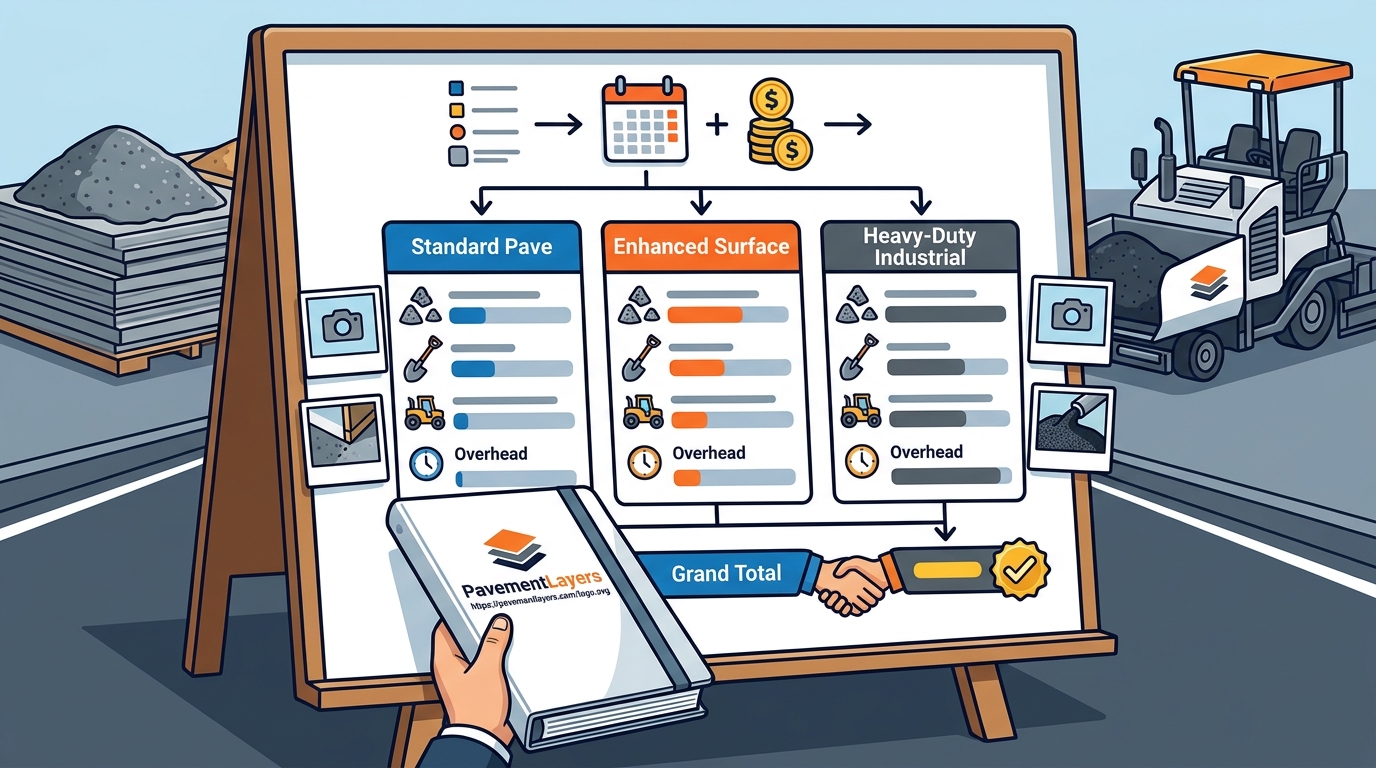
Hybrid Models for Flexible Scopes
Hybrid pricing models combine elements of unit, lump sum, and cost plus pricing to fit complex project scopes. This model is useful for projects that have both fixed and variable components, such as a parking lot that requires both paving and drainage work. It provides flexibility while maintaining clarity.
For instance, you might use unit pricing for the asphalt and lump sum pricing for the drainage installation. This approach allows you to price each component accurately while providing a single total for the client. It reduces the risk of mispricing either part of the project.
PavementLayers allows you to build these hybrid models with ease. You can mix and match pricing types within a single proposal, ensuring that each component is priced appropriately. This flexibility helps you win more contracts by offering a pricing structure that fits the client's specific needs.
Key Takeaways
- Unit pricing provides transparency for material and labor costs, reducing negotiation friction.
- Lump sum pricing simplifies decisions for fixed-scope projects but requires clear exclusions.
- Cost plus pricing protects margins in volatile markets by charging actual costs plus a fee.
- Value based pricing justifies higher prices by focusing on long-term benefits and warranties.
- Hybrid models offer flexibility for projects with both fixed and variable components.
- Real-time cost tracking helps maintain profitability in cost plus and hybrid models.
Frequently Asked Questions
What is the most common pricing model for asphalt paving?
Unit pricing is the most common model for asphalt paving because it allows clients to see costs per square yard or ton. This transparency helps them understand the value of materials and labor.
How do I choose between lump sum and unit pricing?
Choose lump sum for fixed-scope projects with clear boundaries. Use unit pricing for projects where quantities may vary or where clients want to see detailed cost breakdowns.
Can I use multiple pricing models in one proposal?
Yes, hybrid models allow you to combine unit, lump sum, and cost plus pricing. This is useful for complex projects with different components, such as paving and drainage.
How does PavementLayers help with pricing?
PavementLayers allows you to customize pricing models, apply preloaded specifications, and include images with measurements. This ensures your proposals are accurate, clear, and professional.
What is cost plus pricing and when should I use it?
Cost plus pricing charges actual costs plus a fee for profit. Use it for complex or long-term projects where material costs may fluctuate, as it protects your margins while maintaining transparency.
How do I justify higher prices with value based pricing?
Highlight the long-term benefits, such as warranties and reduced maintenance. Use images and detailed specifications to showcase the quality of your work and the value of your premium services.
Conclusion
Selecting the right pricing model is critical to winning pavement contracts. By understanding unit, lump sum, cost plus, value based, and hybrid models, you can tailor your proposals to each client's needs. PavementLayers provides the tools to create clear, image-backed proposals that build trust and win better work. To start using these pricing strategies, visit PavementLayers and see how simple it is to manage your sales process.